If you’ve tried losing weight on your own — apps, calorie counters, YouTube workouts, “what I eat in a day” videos — and the scale has either bounced back or stalled out, you’re not broken. The system is.
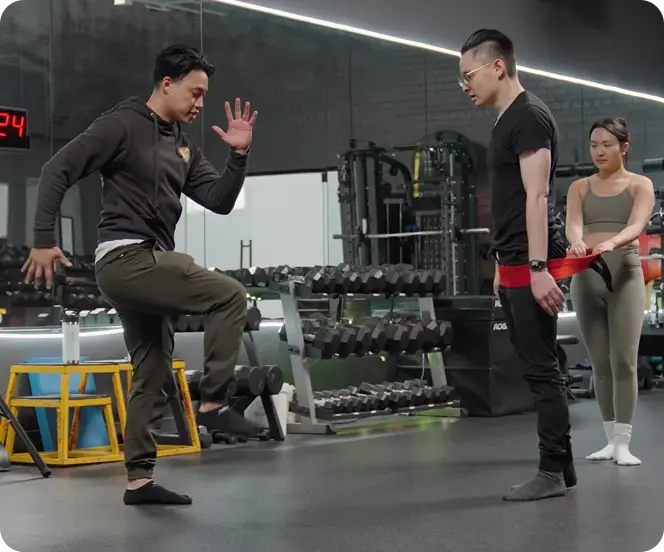
I’m Liam, head coach at Impact Fitness Oakland, and I’ve been coaching weight loss in the East Bay for over a decade. The single biggest pattern I see: the people who lose weight and keep it off don’t have better willpower than the people who don’t. They have a coach who knows them, sees them weekly, and adjusts the plan in real time when life happens. Apps can’t do that. Generic programs can’t do that. A 1-on-1 weight loss coach in Oakland can.
What a Weight Loss Coach Actually Does
A real weight loss coach is part trainer, part nutrition strategist, part behavioral psychologist, part accountability partner. The work breaks down into four buckets:
1. A baseline assessment that’s honest
Before anything else, we measure where you are: body composition, strength, cardio capacity, mobility, current eating patterns, sleep, stress, and history of past attempts. This is the part most online programs skip — which is why their “personalized” plans aren’t.
2. A program built around your real life
Three workouts a week if you have three. Two if you don’t. Nutrition that fits how you actually eat (not a meal plan from a magazine). Recovery that respects your sleep schedule. The plan I’d write for a 38-year-old parent of two with a 7am commute is not the plan I’d write for a 26-year-old engineer working from home.
3. Weekly check-ins that catch problems early
Most weight loss attempts die quietly in week 4 or 5, when results plateau and motivation dips. A coach catches that on day three of week 4 and adjusts before it becomes a crisis.
4. Sustainable behavior change
Losing 20 pounds is hard. Keeping 20 pounds off for five years is harder. The coaching that matters most happens in months 4–12, when the easy gains are gone and you’re learning the habits that hold the weight off for life. This isn’t anecdotal — the National Weight Control Registry’s analysis of long-term maintainers (Wing & Hill, 2001 — Annual Review of Nutrition) found that people who keep weight off for years overwhelmingly do so through structured exercise + accountability, not willpower or short-term diets.
Why Most Weight Loss Apps Fail
The weight loss app industry is huge — and the long-term success rate is terrible. Industry data consistently shows that 80–95% of people who lose weight on app-based programs regain it within 1–5 years.
The reasons are predictable:
- No one is actually watching. An app doesn’t notice when you stop logging. A coach does.
- Generic plans, individual bodies. Your metabolism, hormonal context, training history, and joint health are not the same as the average user the app was designed for.
- No real exercise instruction. A 30-second video of a squat is not coaching. Bad form under load is how people get hurt.
- No room for life. Vacations, illness, work travel, family emergencies — apps can’t adapt. A real coach reroutes the plan in 10 minutes.
I’ve worked with clients who lost 15 pounds on an app, regained 20 within a year, and arrived at our studio frustrated. Almost every time, the issue wasn’t effort. It was that they were trying to coach themselves.
What 1-on-1 Weight Loss Coaching Looks Like at Impact Fitness Oakland
Our weight loss coaching combines three things that work together — and rarely do separately:
Strength training that protects your metabolism
The biggest mistake in weight loss is doing only cardio while eating in a calorie deficit. You lose weight, but a meaningful percentage of it is muscle. Less muscle means a slower resting metabolism, which makes the weight come back faster. Our programs prioritize strength training first and add conditioning around it. The American College of Sports Medicine’s position stand on exercise and weight loss (Donnelly et al, 2009 — Medicine & Science in Sports & Exercise) is clear: meaningful, durable fat loss requires resistance training combined with caloric restriction — not cardio alone.
Conditioning that actually fits your life
For some clients that’s boxing and strength training combined. For others it’s incline walking. The “best” conditioning is whatever you’ll do consistently for six months — not the one with the highest calorie burn on paper.
Nutrition coaching, not a meal plan
Our nutrition coaching program doesn’t hand you a meal plan you’ll abandon in two weeks. We teach you to eat in a way that works with your schedule, your preferences, and your social life — without missing out on the food you love. Long-term weight loss is not a 12-week event — it’s a way of eating you can sustain forever.
Is a Weight Loss Coach Worth the Investment?
Private 1-on-1 weight loss coaching at our Oakland studio is $125 per session — the same rate as general personal training. If $125 stretches your budget, our semi-private training at $65 per 55-minute session (up to 4 clients per coach, individualized programming) is roughly half the cost while delivering most of the same coaching benefit. Small group training is even more accessible at under $32 per session.
Whether 1-on-1 is “worth it” depends on what you compare it to. Compare it to: 5 years of failed app subscriptions ($600–$1,200), the cost of GLP-1 medications ($800–$1,400/month, often without lifestyle support), the medical costs of obesity-related conditions, or the opportunity cost of feeling unwell for another decade.
Many weight loss coaching programs at our studio are HSA/FSA-eligible via our TrueMed partnership — clients save an average of 30% with a documented medical reason. Worth checking with your provider before assuming it’s out-of-pocket.
What to Look for in a Weight Loss Coach
If you’re shopping around for a 1-on-1 weight loss coach near you, ask:
- Are they certified, and in what? (Look for NASM, NSCA, ACE, ACSM, or an equivalent personal training certification — plus a nutrition certification like Precision Nutrition.)
- How many clients have they coached through 50+ pounds of weight loss?
- What’s their re-gain rate at the 12 and 24-month mark?
- Do they prescribe extreme calorie deficits, or sustainable changes?
- How do they handle GLP-1 medications if a client is on them?
If a coach pushes 1,200-calorie diets, recommends fasted cardio for “fat burning,” or tells you cardio is the answer — keep walking.
Frequently Asked Questions
How fast will I lose weight with a personal coach?
Sustainable fat loss runs about 0.5–1% of bodyweight per week. For a 200-pound person, that’s 1–2 pounds weekly. Faster than that and you’re losing muscle and water. Slower than that, and the program may need adjusting.
Do I need a separate nutritionist?
For most clients, no. Our coaches handle the nutrition coaching alongside the training. For clients with medical conditions (Type 1 diabetes, kidney disease, eating disorder history), we’ll refer to a registered dietitian.
Can I work with a weight loss coach if I’m on Ozempic or another GLP-1?
Yes — and you should. We’ve written about this in detail in our Ozempic and exercise guide. Strength training is critical when you’re on a GLP-1 to prevent muscle loss alongside the fat loss.
How long do most weight loss coaching engagements last?
Our typical client commits to 12 weeks initially, with most extending to 6–12 months for the maintenance phase. The first 90 days build the plan; the next 6+ months build the habits that keep it off.
What if I have an injury or chronic pain?
That’s actually one of the strongest reasons to work 1-on-1 rather than in a class. We design around your body, not around an average. Many clients come to us specifically because group classes aggravated existing issues.
Ready to Try a Free 50-Minute Session?
The hardest part of weight loss is usually starting. We make that easy: book a free 50-minute consultation and assessment at our Oakland studio. We’ll measure where you are, talk through what’s worked and what hasn’t, and tell you honestly whether 1-on-1 coaching is the right next step for you.
Schedule your free Oakland weight loss consultation →
Ready to start?
Book Your Free Intro Session
One session, no commitment. We’ll listen, assess where you’re at, and build the right plan for you.
Or text / call (510) 469-0084