Quick answer: For pure calorie burn during a session, HIIT often wins. For total fat loss over weeks and months, strength training wins by a significant margin. The reason: strength training preserves and builds muscle, which raises your resting metabolic rate and ensures the weight you lose is fat, not muscle. HIIT is excellent as a supplement; it’s a poor replacement. The most effective Oakland weight-loss programs blend both, with strength as the foundation.
Walk into any boutique fitness studio in Oakland and you’ll hear HIIT (High-Intensity Interval Training) marketed as the ultimate fat-burning solution. Walk into a serious strength gym and you’ll hear the opposite. Both are wrong in isolation. Here’s the honest breakdown of what each does, what each doesn’t do, and how to combine them for actual fat loss.
Building a Workout Mix That Actually Burns Fat (Not Just Calories)
The HIIT Workout We Use With Oakland Fat Loss Clients
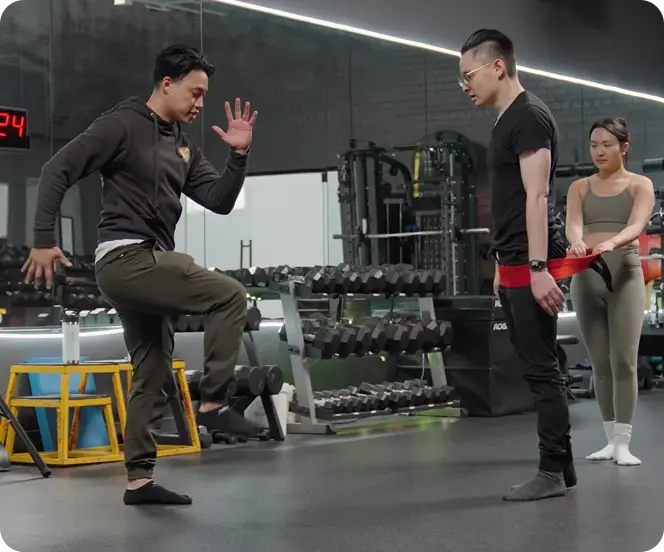
When clients ask about hiit vs strength training for fat loss, we start with a focused hiit workout that leverages high-intensity interval training to spike heart rate and burn calories quickly. Our hiit session blends body weight circuits, short sprint intervals, and bike or row blocks so clients of different fitness level can scale intensity. Effects of high-intensity interval training include improved cardiorespiratory fitness, reduced body fat and visceral fat when combined with proper nutrition. HIIT training also helps burn more calories in a short time and can increase fat loss efficiency compared with moderate-intensity continuous training for some people. We track body fat percentage closely with every fat-loss client.
A Strength Workout Template That Burns Fat for 48 Hours
Strength sessions focus on resistance training and weight training to build muscle and increase resting metabolic rate so you burn more calories at rest. Our template includes compound lifts—squats, deadlifts, presses—and circuit training formats to maintain elevated heart rate while prioritizing strength gains and muscle mass. Strength training builds lean muscle, improves body composition, and contributes to long-term fat loss and weight loss maintenance. Alternate heavy sets with moderate accessory circuits to maximize caloric expenditure and reduce fat mass over weeks. This is the best strength training for fat loss element in a training week — the foundation we combine with HIIT and cardio.
How to Combine Both into a Weekly Workout Plan That Cuts Body Fat
Deciding between hiit or strength training is a false choice for many clients; combining hiit and strength training across a weekly workout yields sustainable fat loss and improved body composition. A typical training week: 2–3 strength training days, 1–2 hiit sessions, and 1 moderate-intensity cardio day for recovery. This mix balances muscle preservation, strength gains, and the burn more calories benefits of high-intensity interval training vs steady-state cardio. Monitor muscle mass, body weight, body fat percentage, and recovery to prevent overtraining. We program progression to ensure long-term fat loss and reduced body fat, tracking body composition every step of the way.
What HIIT Actually Does Well
HIIT involves short bursts of high-intensity work alternated with brief recovery periods — sprints, burpees, kettlebell swings, rowing intervals. A typical HIIT session burns 250–500 calories in 20–30 minutes.
The advantages:
- Time efficiency. A real HIIT session can hit cardiovascular and metabolic targets in 20 minutes that would take 45 minutes of steady-state cardio.
- EPOC (excess post-exercise oxygen consumption). The “afterburn” effect. After a real HIIT session, your body keeps burning extra calories for 2–6 hours post-workout. Numbers are smaller than fitness magazines claim — typically 6–15% more calories than baseline — but it’s real.
- Cardiovascular benefit. HIIT improves VO2 max more efficiently than steady-state cardio for most people.
- Variety and engagement. Many people who hate cardio enjoy HIIT, which means they actually do it.
What HIIT Doesn’t Do (Despite the Marketing)
- HIIT doesn’t build significant muscle. Even strength-flavored HIIT (kettlebells, dumbbells, body weight) uses too many reps with too little load to drive real hypertrophy. You can maintain modest muscle, but you won’t build it.
- HIIT doesn’t preserve muscle during fat loss. When you’re in a calorie deficit and only doing HIIT, you’ll lose roughly 25–30% muscle alongside fat — the same percentage as no training at all in many studies.
- HIIT raises cortisol when overdone. 5–6 HIIT sessions per week is the fast track to elevated cortisol, sleep disruption, and weight loss plateaus.
- HIIT recovery is brutal. Real HIIT requires 48–72 hours between sessions. Most “HIIT” classes are actually moderate-intensity circuit training, which is fine but doesn’t deliver the touted EPOC benefits.
What Strength Training Actually Does Well
Strength training (resistance training, weight lifting, etc.) involves loading the muscles to drive adaptation — getting stronger, gaining muscle, improving bone density, and improving metabolic health. A typical strength session burns 200–400 calories.
The advantages:
- Muscle preservation and building. The single most important factor for long-term fat loss. Muscle is metabolically active tissue.
- Higher resting metabolic rate. More muscle = more calories burned at rest, every day, including the days you don’t train.
- Insulin sensitivity improvement. Within 2–4 weeks of consistent training, glucose disposal improves measurably.
- Body composition changes. The mirror test — strength training is what produces the visible muscle definition that pure calorie reduction never achieves.
- Sustainable for life. Recovery is faster than HIIT, joint stress is lower (when programmed well), and you can do it into your 70s and 80s.
- Bone density. Critical for adults over 40, especially women.
What Strength Training Doesn’t Do (As Well)
- Lower per-session calorie burn than HIIT.
- Smaller cardiovascular adaptations. You’ll need some cardio for heart health.
- Slower energy expenditure during the session. The benefit is in what happens between sessions.
The Per-Session Calorie Comparison (Often Misleading)
| Activity | Calories Burned (45 min) | EPOC Calories |
|---|---|---|
| Steady-state cardio (jogging) | ~400–500 | Minimal |
| HIIT (real, intense) | ~350–500 | ~50–100 |
| Strength training (compound lifts) | ~250–350 | ~30–60 |
HIIT looks like the winner here. But this only counts calories burned during and immediately after the session — not the metabolic effect of having more muscle, which strength training builds and HIIT doesn’t.
The Long-Term Math (Where Strength Wins)
Adding 5 lbs of muscle through strength training increases your resting metabolic rate by roughly 50–75 calories per day. Over a year, that’s 18,000–27,000 extra calories burned at rest — equivalent to 5–8 pounds of fat loss without changing anything else. HIIT does not deliver this.
This is why two clients can have identical training calories burned but completely different body composition outcomes. The one doing strength training keeps and adds muscle; the one doing only HIIT loses both fat and muscle.
How to Combine Them (The Smart Approach)
Foundation: 2–3 strength sessions per week
Compound lifts, progressive overload, real intensity. This is non-negotiable for serious weight loss. We covered this in detail in our strength training after 40 playbook — the principles apply to all ages.
Layer in: 1–2 HIIT or moderate cardio sessions per week
Not 5. Not 6. Two at most. HIIT is a supplement, not a foundation. Use it for cardiovascular benefit, additional calorie burn, and variety.
Daily: walking and movement
Often the most underrated lever. 8,000+ daily steps creates significant calorie burn without recovery cost. We talked about this in our first 90 days breakdown.
Sample Week for Weight-Loss Clients
| Day | Workout | Notes |
|---|---|---|
| Monday | Strength: lower body | 45–60 min, compound lifts |
| Tuesday | HIIT or boxing | 20–30 min, real intensity |
| Wednesday | Walk + mobility | 30+ min outdoors |
| Thursday | Strength: upper body | 45–60 min, compound lifts |
| Friday | Rest or zone 2 cardio | Easy 30 min walk/bike |
| Saturday | Strength: full body | 45–60 min, mix of compound + accessory |
| Sunday | Rest or hike | Active recovery |
This split is doable, sustainable, and produces real fat loss when paired with appropriate nutrition.
The Boxing Twist
Boxing is one of the few activities that genuinely combines HIIT-style conditioning with skill-building, mental focus, and stress relief. We covered this in our boxing and strength for fat loss article. For Oakland clients who want HIIT without dreading it, boxing works exceptionally well.
What Most People Get Wrong
1. Doing only HIIT and wondering why they plateau
By month 4–6, the calorie burn from HIIT has adapted, the muscle loss is starting to show in the mirror, and the scale stops moving. Without a strength foundation, this is inevitable.
2. Doing only strength and ignoring cardiovascular health
Heart and lung capacity matter for life, not just for fat loss. 1–2 cardio sessions per week is sufficient and necessary.
3. Doing 6 HIIT classes per week and feeling exhausted
Cortisol elevation, sleep disruption, and stalled progress. Less is more with HIIT.
4. Treating HIIT as if it builds muscle
It doesn’t. The dumbbells in HIIT classes are too light and the rep schemes too high to drive hypertrophy. Get your muscle from real strength training.
Frequently Asked Questions
Is HIIT better than strength training for fat loss?
For per-session calorie burn, HIIT often wins. For total fat loss over weeks and months, strength training wins because it preserves and builds muscle. Combine both — strength as the foundation, HIIT as the supplement.
Can I lose weight with only HIIT and no strength training?
Yes initially, but you’ll plateau and lose muscle along with fat. Long-term body composition outcomes are significantly worse than strength training alone or strength + HIIT.
How many HIIT sessions per week should I do?
One to two for most weight-loss clients. Three is the maximum for advanced trainees. Five or six leads to cortisol elevation, recovery debt, and stalled results.
How many strength training sessions for weight loss?
Two to three sessions per week is the sweet spot for most clients. We broke this down in our first 90 days guide.
Does HIIT have a real “afterburn” effect?
Yes, but smaller than marketing claims. EPOC adds about 6–15% extra calorie burn for 2–6 hours post-workout — typically 50–100 calories total. Real, but not life-changing.
Is boxing considered HIIT?
Real boxing training (heavy bag, mitt work, conditioning rounds) functions as HIIT. It also builds skill and reduces stress in ways treadmill HIIT can’t.
Ready to Build the Right Mix?
If you’ve been doing only HIIT or only strength training, the missing piece is probably the other. We’ll assess where you are and build a plan that combines both intelligently.
Book your free intro session → or call (510) 469-0084.
Impact Fitness Oakland — strength + boxing + nutrition since 2018. 1% better every day. Consistency compounds.
What the science actually says about HIIT vs strength for fat loss
Two studies cut through the marketing. The EPOC systematic review by LaForgia, Withers & Gore (2006 — Journal of Sports Sciences) found that the “afterburn” effect of high-intensity exercise accounts for 6–15% of session caloric cost — real, but much smaller than HIIT marketing claims. And the ACSM 2009 Position Stand (Donnelly et al) concluded that exercise alone — HIIT or otherwise — produces only modest fat loss without nutrition support. The honest comparison: strength training builds the muscle that drives your daily metabolic rate, while HIIT delivers a smaller acute caloric bump. Long-term fat loss comes from combining the two with a nutrition strategy.
Meet the Impact Fitness Oakland Team
Three PPSC-certified personal trainers, 25+ combined years coaching the East Bay. Liam Saechao (Owner, Oakland Native, USMC vet), Ed Osorio (pre/post-natal & pain-free training), and Stanley Arnold-Wright (sports performance & martial arts). Meet the full team →
Ready to start?
Book Your Free Intro Session
One session, no commitment. We’ll listen, assess where you’re at, and build the right plan for you.
Or text / call (510) 469-0084